
Guides
How do I compare two flavors when both seem good?
Use one occasion, a short set of sensory prompts and a clear preference question to compare two grocery flavors without forcing a universal winner.
By finds editorial · 3 min read ·
Compare the two flavors for the same occasion, then ask which you would choose again. Note the specific difference in flavor, texture or finish instead of forcing one to be “bad.” In finds, two positive reactions can still have a personal order. If you cannot distinguish them confidently, leave the decision open.
Give the comparison one job
“Better” is vague until you name the occasion. A snack you want with coffee may differ from one you want during a long walk. Write the question first: “Which would I pick for an afternoon snack?”
Use exact product names, including flavor. If you compare one product warm and another straight from the freezer, record that difference. You can still describe your experience, but it would not isolate the flavor alone.
A compact comparison card
| Prompt | Product A | Product B |
|---|---|---|
| First flavor you notice | Your observation | Your observation |
| Texture | Your observation | Your observation |
| Sweetness or intensity | Your observation | Your observation |
| Finish after a bite | Your observation | Your observation |
| Choice for this occasion | Your preference | Your preference |
Leave a cell blank if you did not notice a difference. The table is a note template, not a scientific sensory test. You do not need to turn an ordinary snack into laboratory work.
Keep liking and preference separate
Our existing wafer-cookie guide uses actual editorial notes where both products received positive reactions but occupied different positions in one person’s sweets ranking. That is a useful distinction: enjoying both does not require treating them as interchangeable.
Your note should explain the order. “More lemon flavor, but sweeter than I wanted” gives a future reader a reason they might choose differently. A numerical rank alone cannot provide that context.
When the answer changes
A product can win for one occasion and lose for another. Keep the qualification in your note rather than describing a personal ranking as a universal verdict. If your memory is weak, taste again when convenient; do not invent a confident comparison to finish a list.
In finds, start with products you actually know and use the comparison prompt shown in the feature image. The image demonstrates the interface, not a result from a controlled test.
See how product ranking works in practice for the steps. For examples of notes that explain a preference, read remembering products you liked.
See the feature
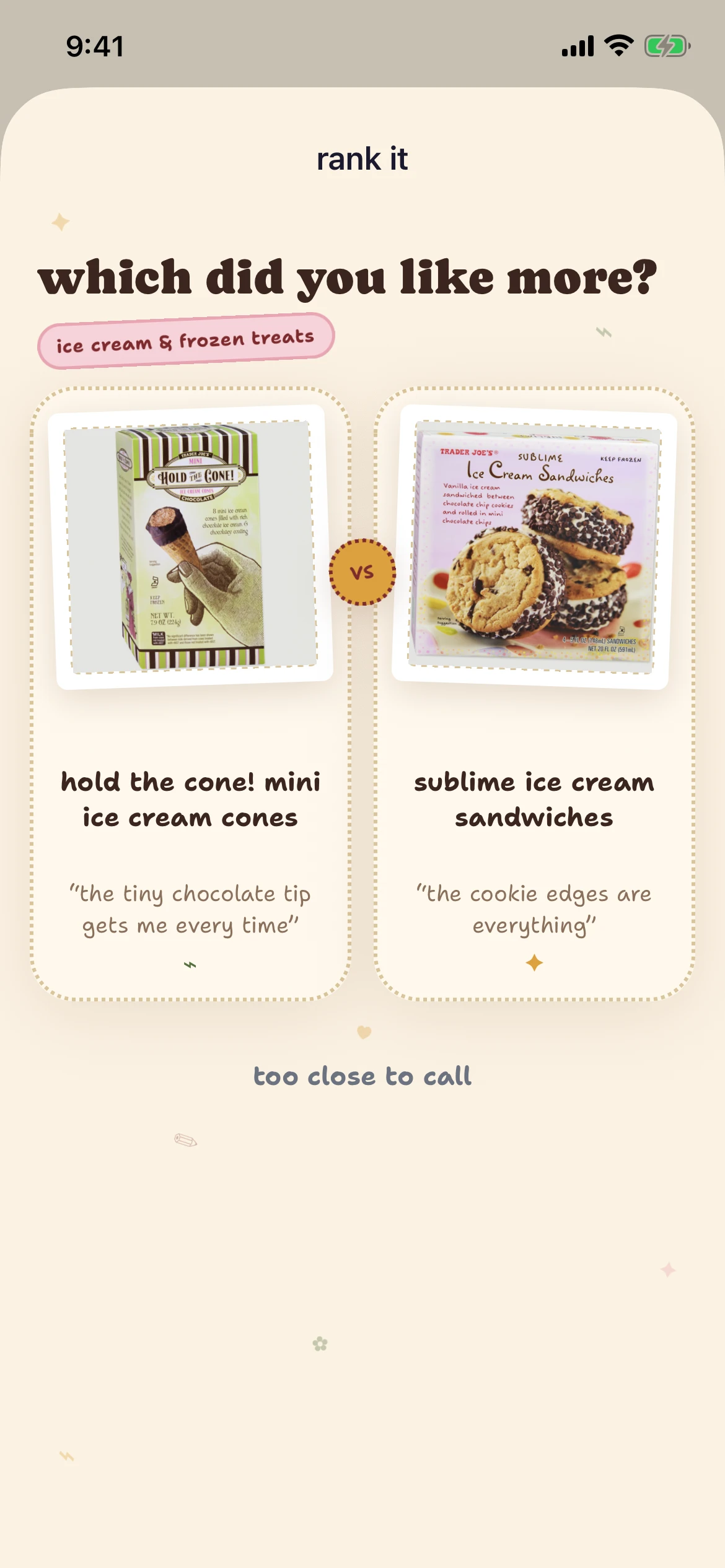
Illustrative finds comparison screen. The displayed notes demonstrate the feature and are not tasting evidence for this article.