Guides
What should I do when two snacks are too close to rank?
Use a tie when you cannot honestly choose between two snacks. Learn what finds’ too close to call control does and how context can clarify a preference.
By finds editorial · 4 min read ·
CPG • practical guide
checked september 30, 2026
If you cannot honestly choose between two snacks, use “too close to call” in the finds comparison rather than inventing a winner. If your answer changes by occasion, keep that context in your tasting note. If you have not tried one of the products, you do not yet have a tasting preference to compare.
The worked app example compares specialty CPG snacks, MASA Original Tortilla Chips and Hippeas Groovy White Cheddar Puffs.
What does “too close to call” mean in finds?
During a ranking comparison, finds asks “which did you like more?” A separate “too close to call” control lets you submit a tie for that comparison. The native example below shows the control; the current app implementation was checked September 30, 2026.
The useful meaning is limited: you could not separate that pair in this comparison. This guide does not claim that a tie freezes two products at one displayed rank, gives them identical scores or prevents later comparisons. A comparison choice and the final position in a list are different things.
Separate four situations before choosing
| Your situation | Useful response |
|---|---|
| You clearly prefer one | Choose that product |
| Both are good and you cannot separate them | Use too close to call |
| You like them for different occasions | Record the context; choose only if a preference is clear |
| You have not tried one, or cannot remember it well enough | Do not manufacture a confident tasting judgment |
“Both are good” does not automatically require a tie. You might like both protein bars but still reach for one first. A tie is useful when the preference question stays unresolved, not when both receive a positive reaction.
Check the occasion instead of adding decimal points
Ask a concrete question: which would you choose for the same occasion? Two snacks may trade places depending on whether you want something with coffee, a dessert after dinner or food for a trip. That is useful information, not a defect in your taste.
If a clear preference appears, choose it. If it does not, keep the tie. You do not need to retaste a food or buy both again just to make a list look decisive.
Here is a copyable context note:
Prefer product A for: Prefer product B for: What I remember about texture or sweetness: Overall preference: clear / too close / uncertain memory
These are prompts for your own experience. They are not the outcome of a taste test conducted for this article.
A tie is different from forgetting
An honest tie means the remembered experiences are comparable and neither wins for you. An uncertain memory means the evidence is weak. Keep the uncertainty visible rather than converting it into a claim of equality. Untasted recommendations belong in Saved until you have a reaction.
Read the completed ranking in scope
When the comparisons are complete, the result is a position in your account's product history. It is not a community vote or a universal recommendation. A useful note preserves why you chose, tied or remained unsure, even when the displayed order becomes more detailed over time.
For the full sequence, follow how to rank products. For a tasting method, see comparing two flavors. For broad ratings that stop helping you choose, see why all your snacks get four or five stars.
See the CPG product workflow
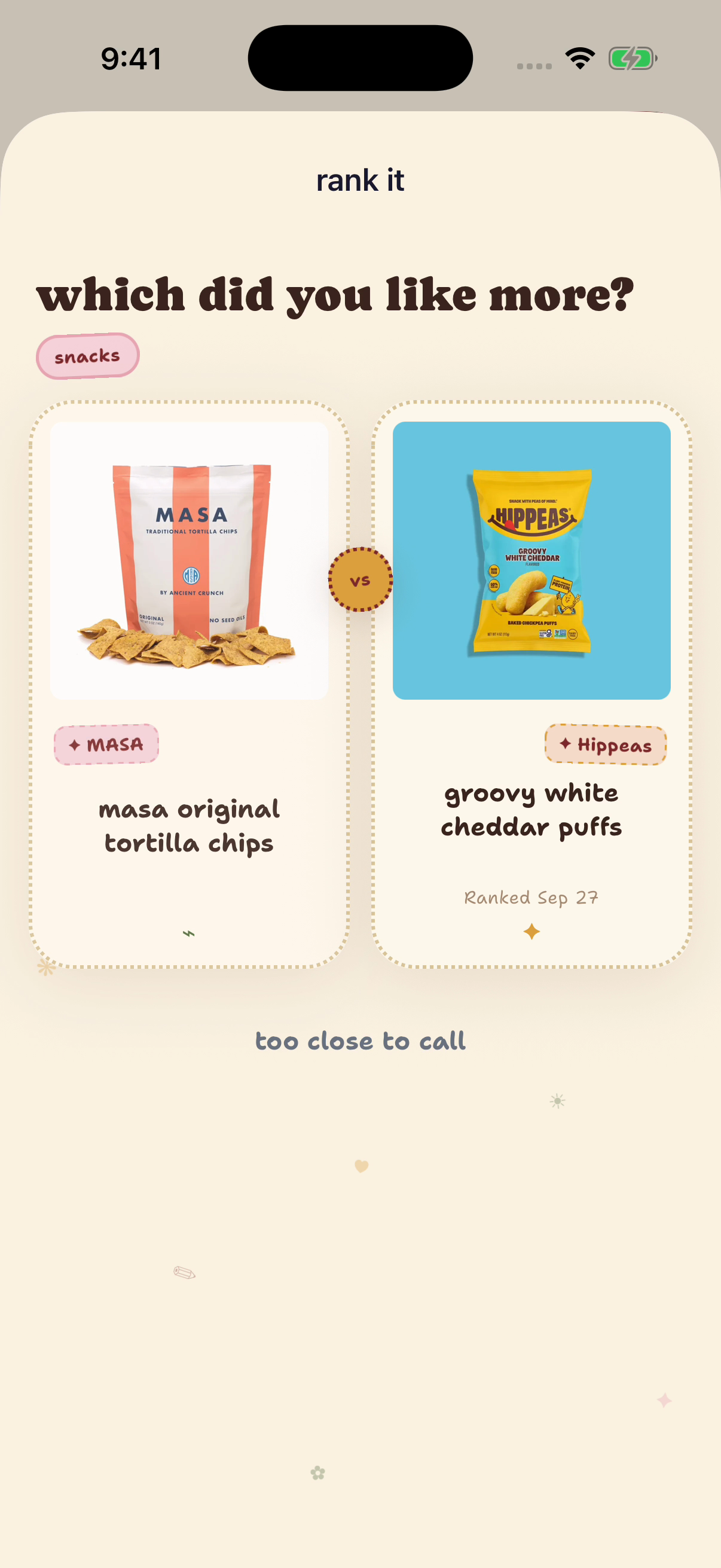
Native finds example account, captured September 29, 2026. Products and controls demonstrate the workflow; the ranks, notes and displayed tasting dates are seeded examples, not shopper evidence.
Sources and method
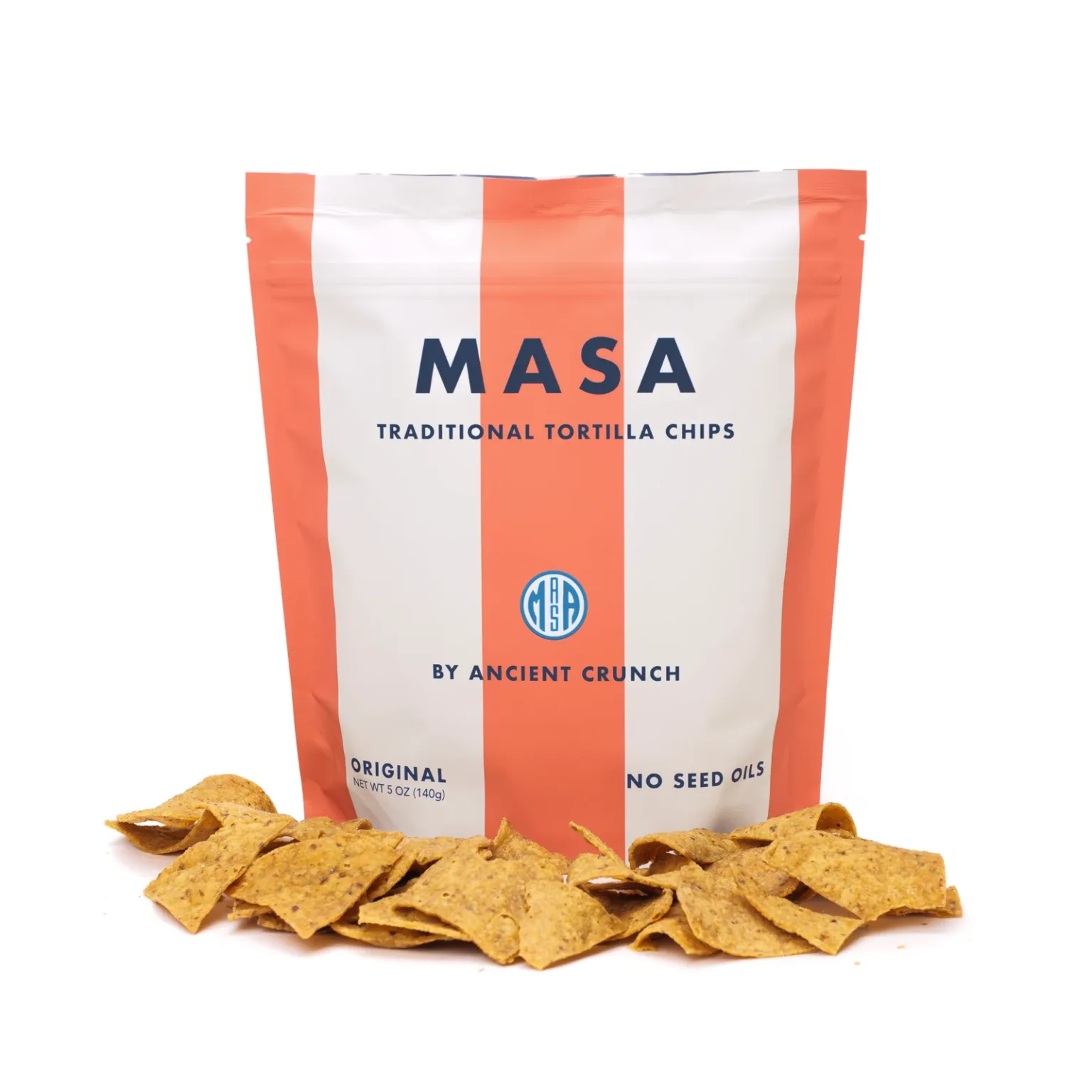
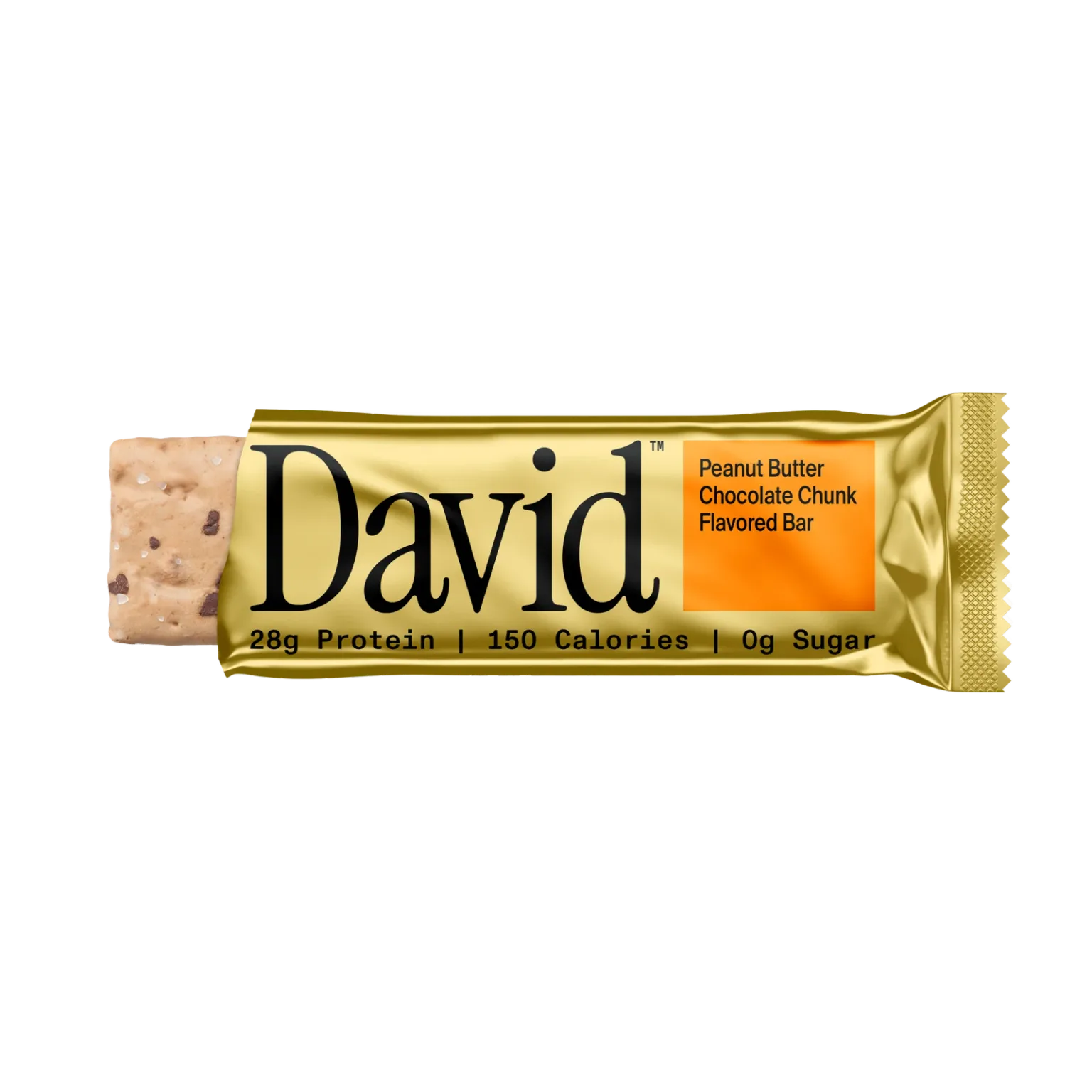
finds publishes this guide. Templates are editorial suggestions, not quotations or a new taste test. Exact OLIPOP, David and MASA product records and published catalog images were checked September 30, 2026. Native finds example account, captured September 29, 2026. Products and controls demonstrate the workflow; the ranks, notes and displayed tasting dates are seeded examples, not shopper evidence.
The illustrations show supported app behavior. No comparative performance, local inventory or acquisition lift is claimed. For the next discovery step, see finding new specialty CPG snacks and drinks.
Sources
- finds App Store listing and owned product guides, checked September 30, 2026
- Current finds comparison UI and tie submission inspected September 30, 2026; implementation evidence, no ranking-formula claim
- Native finds CPG ranking capture, September 29, 2026, seeded example account
- OLIPOP official Vintage Cola product page, checked September 30, 2026
- David official Peanut Butter Chocolate Chunk product page, checked September 30, 2026
- MASA official Original Tortilla Chips product page, checked September 30, 2026
- Exact published specialty product records and images, finds production catalog, checked read-only September 30, 2026