
Guides
How to keep a taste journal when you’re picky about texture
Use clear texture words, preparation context and familiar comparisons to record personal food preferences without pressure to like every new product.
By finds editorial · 3 min read ·
Record the texture you noticed, how the food was prepared, and whether you would choose it again. In finds, attach that note to the exact product and compare it with something familiar. This is a way to remember personal preferences, not a treatment program or a requirement to try foods you do not want.
Replace “weird texture” with one useful detail
You do not need a specialist vocabulary. Use words you would understand in the store next month: crisp, chewy, smooth, grainy, soft, sticky or dry. Choose the word that describes your experience rather than borrowing language from another review.
A practical note template is:
Product and flavor: Prepared or served: Texture I noticed: Similar familiar food: Would choose again:
The preparation line matters. A product eaten straight from the fridge may feel different after warming. Recording that context is more useful than assuming the package always produces one texture.
Compare with a familiar reference
If you want to explain a preference, compare the product with something you know well. “I preferred the crisp version for this snack” gives the ranking a reason. Do not force an unfamiliar food into a confident position when you cannot remember it clearly.
| What you know | What to record |
|---|---|
| You liked the flavor but not the texture | Keep both observations |
| Preparation changed the experience | Name the preparation you used |
| You only tried a small amount | Keep the scope of the reaction narrow |
| You do not want to try it again | That is a valid preference record |
Keep recommendations specific
When asking a friend for an idea, name the texture you enjoy. A recommendation becomes more useful when the person explains the texture they noticed, rather than only saying the food is popular.
Still check the actual package for ingredients, preparation and any relevant requirements. A taste journal does not determine dietary suitability, and this guide does not interpret sensory symptoms or offer clinical advice.
Let the record stay small
The purpose is to reduce repeated uncertainty about familiar products. You do not need a target number of foods, a streak or a complete ranking of every category. Start with a product you already enjoy and keep the detail that makes it a reliable choice for you.
Read how to compare two flavors for a simple comparison card, or the calorie-free taste-journal format for a broader notebook routine.
All templates on this page are editorial suggestions. The image illustrates the comparison interface, not a sensory test result.
See the feature
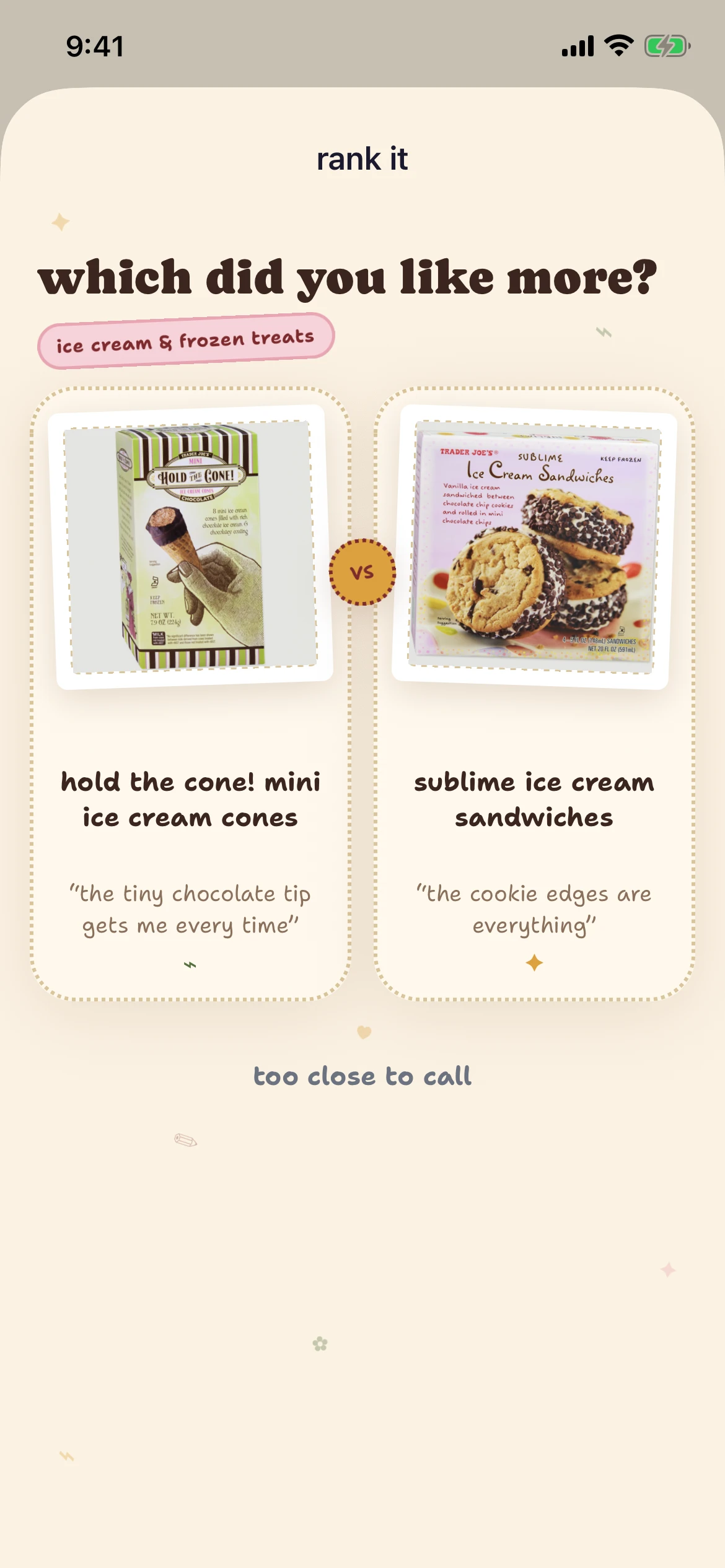
Illustrative finds comparison screen. The displayed notes demonstrate the feature and are not tasting evidence for this article.